


Dr Kojodjojo Pipin
Cardiologist


 Add as a preferred source on Google
Cardiologist
Understanding what causes heart rhythm disturbance or arrhythmia in children, the most common types of arrhythmias, and when treatments such as catheter ablation may be recommended can help parents make informed decisions about their child's care.
Arrhythmia refers to an abnormal heart rhythm. This may occur when the electrical signals that coordinate the heartbeat do not function as they should.
In children, arrhythmias can cause the heart to beat:
The heart normally beats in a coordinated rhythm controlled by electrical impulses that travel through specialised pathways in the heart. When these electrical signals are disrupted or follow an abnormal pathway, the heart rhythm may become abnormal.
Some childhood arrhythmias occur only occasionally and do not cause significant problems. Others may lead to symptoms such as palpitations, dizziness or fainting, and may require further evaluation by a paediatric cardiologist.
Arrhythmias in children can develop for several reasons. In many cases, the heart itself is structurally normal, and the problem lies in how electrical signals travel through the heart.
Common causes include:
Some children are born with an additional electrical pathway in the heart. This extra pathway can allow electrical signals to travel in a loop, causing episodes of rapid heartbeat. This is seen in conditions such as Wolff-Parkinson-White (WPW) syndrome.
Instead of starting from the heart's natural pacemaker, electrical signals may originate from an abnormal area of the heart muscle, leading to fast or irregular rhythms.
Children born with structural heart defects may be more prone to rhythm disturbances. In some cases, arrhythmias may develop after corrective heart surgery due to scar tissue affecting electrical conduction.
Certain genetic conditions can affect how electrical signals move through the heart.
Other factors may occasionally trigger arrhythmias in children, including high fever, infections affecting the heart, electrolyte imbalances, or certain medications.
Several types of arrhythmias can occur in children, but some are seen more frequently than others.

SVT is the most common arrhythmia in children. It causes the heart to suddenly beat much faster than normal due to abnormal electrical activity in the upper chambers of the heart. Episodes may start and stop suddenly and can last from seconds to hours.
WPW occurs when a child has an extra electrical pathway connecting the upper and lower chambers of the heart that is visible on the ECG. This extra pathway can allow electrical signals to travel in a circular pattern, triggering rapid heart rhythms.
Some children may experience premature atrial contractions (PACs) or premature ventricular contractions (PVCs). These extra beats are often benign and may not require treatment if they occur infrequently.
Ventricular tachycardia is less common in children but may be more serious, particularly when associated with underlying heart disease or inherited rhythm disorders.
Children with arrhythmias may experience symptoms during episodes of abnormal rhythm.
Parents should consider seeking medical advice if their child has:
Although many childhood arrhythmias are not life-threatening, persistent or severe symptoms should be evaluated by a doctor.

Treatment for arrhythmias in children depends on the type of rhythm disturbance, its frequency, and whether it causes symptoms.
Some arrhythmias can be managed with medication or may even resolve as a child grows older. However, in certain situations, doctors may recommend catheter ablation as a more definitive treatment.
Catheter ablation may be considered when:
For many children with specific arrhythmias, catheter ablation can offer a long-term solution by eliminating the abnormal electrical pathway responsible for rhythm disturbance.
Catheter ablation is a minimally invasive procedure performed by a cardiac electrophysiologist. Children are usually given general anaesthesia or deep sedation so they remain comfortable and still during the procedure.
During the procedure:
The success rates for catheter ablation are high.
In common conditions such as supraventricular tachycardia, the acute success rate can be as high as 98%. The risk of serious complications is less than 6 in 1,000 patients (0.6%). The success rates and risks are comparable to adults having catheter ablation.
While catheter ablation is often used to treat fast heart rhythms, some children with slow heart rhythms may require a different approach, such as a pacemaker.
For those requiring pacing support, newer technologies such as leadless pacemakers offer an alternative to traditional systems.
Unlike conventional pacemakers that rely on wires, these devices are placed directly within the heart through the veins via a minimally invasive approach. This allows the device to be removed or replaced over time, which can be an important consideration as a child grows. Without leads, there may also be a lower risk of complications, such as infection or lead damage.
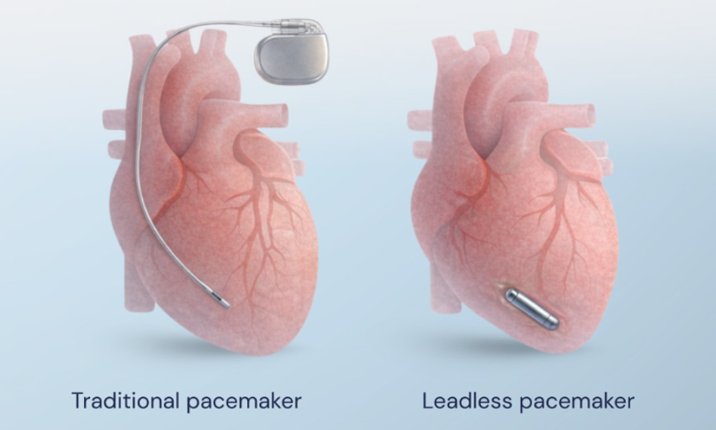
At Mount Elizabeth Hospitals, our cardiology and paediatric teams work closely to evaluate each case and recommend a personalised approach that best suits the patient's immediate needs and long-term care.
If your child has symptoms of a possible heart rhythm problem, early evaluation can help determine whether the condition requires monitoring, medication, or further treatment.
At Mount Elizabeth, our cardiologists and cardiac electrophysiologists treat heart rhythm disorders in adults and children. Cardiac catheter ablation can help correct abnormal electrical pathways and restore a normal heart rhythm.
Learn more
This is a phenomenon that has been rearing its head much more in recent years. Athlete or not, it is important to understand its possible causes.

Heart attacks are the 2nd most common cause of death after cancer in Singapore – but help is available for if you are diagnosed and treated early.

Various kinds of jobs create different types of stress, and whether the stress becomes harmful depends on the individual.

Complications arising from diabetes and Peripheral Arterial Disease often result in patients losing a limb, but it does not have to be that way.

It’s not unusual to hear of professional athletes suffering a heart attack at the peak of their game. Cardiologists can provide expert advice to athletes.
We recommend the most common heart operations to beat heart disease.

Our breast surgeon explains how to understand your risk, warning signs to know, why screening matters even when you feel well, and what surgery can look like today.

As knee osteoarthritis progresses, everyday activities can become more difficult. Our pain specialist and orthopaedic surgeon explain the treatment options available and how to find the right approach for you.

Dr Edwin Chng from Parkway Shenton explains why weight loss can slow down during medical weight management, and when it may be time to review your treatment plan.

Prostate cancer is common, often silent, and still diagnosed too late in Singapore. Urologist Dr Tan Yung Khan on what every man should know about screening, diagnosis, and treatment.

We answer common questions about haze, and how this can affect common chronic lung conditions such as asthma and chronic obstructive pulmonary disease (COPD), and 8 simple tips to protect ourselves against it.

Our neurosurgeon, Dr Vincent Ng, explains the factors specialists consider when deciding whether a brain aneurysm should be monitored or treated, and what the different treatment options involve.
Gleneagles Hospital is part of IHH Healthcare, one of the world's largest integrated healthcare networks.

Download the MyHealth360 app to access an array of medical services conveniently.


Get trusted medical advice from our specialists, dietitians and physiotherapists directly in your inbox.
Subscribe