


Dr Amitabh Monga
Gastroenterologist


 Add as a preferred source on Google
Gastroenterologist
Colorectal cancer refers to cancers that originate in the colon or rectum. It is currently the most common cancer among men and the second most common cancer among women in Singapore, after breast cancer.
While it is more frequently diagnosed in older adults, there is growing concern both globally and locally about a rise in early-onset colorectal cancer (diagnosed in people under the age of 50), challenging the long-held perception that it is primarily a disease of older individuals.
One of the key challenges with colorectal cancer is that it often develops silently. By the time symptoms appear, the disease may already be at a more advanced stage.
This makes screening especially important, even if you feel healthy. Gastroenterologist Dr Amitabh Monga explains how screening can aid in colorectal cancer prevention and management, the tests involved, and more.
Colorectal cancer cannot always be prevented, but screening can significantly reduce the risk by detecting and removing precancerous changes early.
Most colorectal cancers develop over time from small, benign growths called polyps that form in the lining of the colon or rectum. In many cases, these polyps remain harmless. However, some may gradually become cancerous if left undetected.
During a colonoscopy, these polyps can often be identified and removed in the same procedure. This not only allows for early detection but can also help prevent colorectal cancer from developing in the first place.

Being slow-growing, symptoms do not always show up in the early stages of the disease. In fact, it is often only late in the course of colorectal cancer, that patients begin to notice symptoms, such as:
These symptoms may also occur with other conditions such as haemorrhoids (piles), inflammatory bowel disease, or other digestive problems. However, persistent symptoms should always be assessed by a doctor.

Colorectal cancer can affect anyone, including younger adults.
You may have a higher risk if you:
The rise of colorectal cancer among people under the age of 50 is thought to be linked to a combination of factors, including changes in diet and lifestyle patterns (such as lower fibre intake, higher consumption of processed foods, and more sedentary habits), as well as potential shifts in gut microbiome and other environmental influences that are still being studied.
While colorectal cancer in younger adults is receiving increasing attention, most cases still occur in older individuals. Clinical decisions around screening need to balance individual risk factors and overall population needs.
Routine colorectal cancer screening in Singapore is generally recommended for individuals from around age 45, unless younger individuals have specific risk factors, such as:
There are several screening methods available. Your doctor can advise the most suitable option based on your age, risk factors, and medical history.
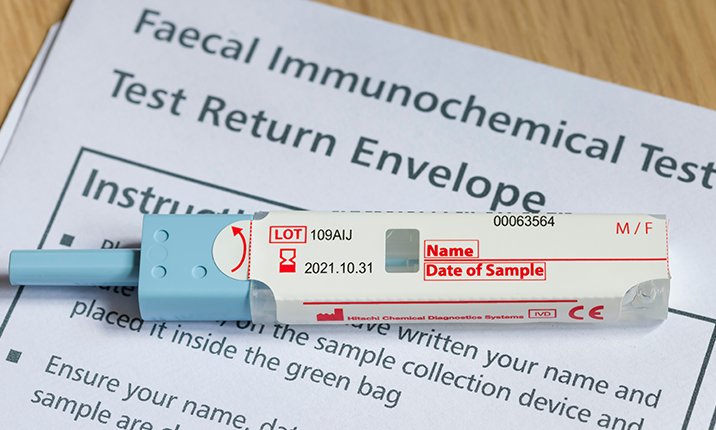
The FIT, also known as an occult blood immunological (OBI) test, checks for tiny amounts of blood in stool that cannot be seen with the naked eye.
The test is usually done at home by collecting stool samples, which are then sent for laboratory testing.
Advantages:
If the result from a FIT test is positive, a colonoscopy is usually required to determine the cause.
A virtual colonoscopy uses computed tomography (CT) imaging to create pictures of the colon.
Before the scan, patients need to drink a bowel preparation medication to clear the colon. The images are then reviewed by a radiologist.
While it avoids inserting a camera into the colon, it has limitations:
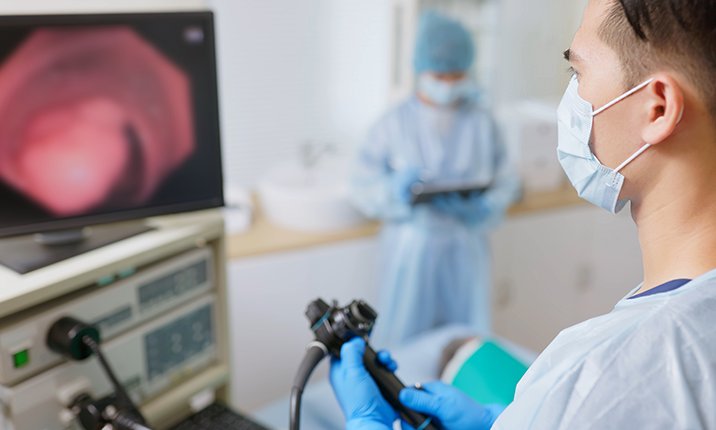
This is considered the recognised standard for colorectal cancer screening.
During the procedure, a thin flexible tube with a camera is gently passed through the rectum to examine the entire colon.
If polyps are found, they can usually be removed during the same procedure and sent for testing.
A colonoscopy:
Most colonoscopies are performed as day procedures, with sedation to improve comfort.
| FIT/OBI stool test | Colonoscopy |
|---|---|
| Checks stool for hidden blood | Examines the inside of the colon directly |
| Done at home | Performed in a medical facility |
| No bowel preparation required | Requires bowel cleansing beforehand |
| Does not remove polyps | Polyps can be removed during the procedure |
| Usually repeated regularly | Screening interval depends on findings and risk |
Both tests play a role in colorectal cancer screening. Your doctor can recommend the best option based on your health profile.
Before a colonoscopy, you will usually need to:
A clean colon allows the doctor to examine the lining carefully and reduces the chance of missing polyps.
During the procedure, a colonoscope is inserted into the rectum and guided through the colon.
Sedation is commonly used, and the procedure usually takes around 20 to 30 minutes.
If polyps are found, they may be removed immediately.
Most patients recover from sedation within 30 to 60 minutes.
Some may experience temporary bloating or mild abdominal discomfort due to air introduced during the procedure.
Your doctor will discuss the findings and advise on the next steps.
Colonoscopy is generally a safe procedure when performed by trained specialists.
Possible risks, such as bleeding or injury to the colon, are uncommon. The risk may depend on factors such as whether polyps are removed and the complexity of the procedure.
Seek medical advice after a colonoscopy if you experience:
The recommended screening interval depends on:
Your doctor will be best placed to advise on screening intervals. In most cases, individuals identified as being 'high-risk' may need to be screened every 2 – 3 years. For those with no history of colorectal cancer, and whose previous colonoscopy was clear, screening intervals can be far longer.

While no lifestyle change can guarantee prevention, healthy habits may help reduce your risk.
These include:
Small lifestyle changes, combined with regular screening, can make an important difference.
Yes. Early colorectal cancer often has no symptoms, which is why screening is important even when you feel healthy.
No. Most polyps are not cancerous. However, some types of polyps may develop into cancer over time, which is why removing them early is beneficial.
Most patients receive sedation during a colonoscopy and do not experience significant discomfort during the procedure. Some temporary bloating may occur afterwards.
The most appropriate and comprehensive test depends on your age, risk factors and medical history. FIT detects hidden blood in stool, while colonoscopy allows doctors to examine the colon directly and remove polyps during the same procedure.
At Gleneagles Hospital, our gastroenterologists bring deep expertise in colorectal cancer screening, to support you in your colorectal cancer prevention and management journey.
Book now
A monthly breast self-examination 7 – 10 days after your period starts can save your life.
The problem with heart disease – aside from the fact that it’s heart disease – is that, without health screenings, it’s unlikely you will know there is anything wrong until it is too late.

Eight myths you might believe about breast cancer screening, and the truth about it.

More women are being claimed by breast cancer now than before. Love them by encouraging them to go for breast screening.

Dr Tan Yah Yuen, general surgeon at Mount Elizabeth Hospitals, answers the questions you may have about mastectomies.

Dr Wee Siew Bock, breast surgeon at Mount Elizabeth Hospital, address your questions and concerns about breast conserving surgery (lumpectomy).

Our breast surgeon explains how to understand your risk, warning signs to know, why screening matters even when you feel well, and what surgery can look like today.

As knee osteoarthritis progresses, everyday activities can become more difficult. Our pain specialist and orthopaedic surgeon explain the treatment options available and how to find the right approach for you.

Dr Edwin Chng from Parkway Shenton explains why weight loss can slow down during medical weight management, and when it may be time to review your treatment plan.

Prostate cancer is common, often silent, and still diagnosed too late in Singapore. Urologist Dr Tan Yung Khan on what every man should know about screening, diagnosis, and treatment.

We answer common questions about haze, and how this can affect common chronic lung conditions such as asthma and chronic obstructive pulmonary disease (COPD), and 8 simple tips to protect ourselves against it.

Our neurosurgeon, Dr Vincent Ng, explains the factors specialists consider when deciding whether a brain aneurysm should be monitored or treated, and what the different treatment options involve.
Gleneagles Hospital is part of IHH Healthcare, one of the world's largest integrated healthcare networks.

Download the MyHealth360 app to access an array of medical services conveniently.


Get trusted medical advice from our specialists, dietitians and physiotherapists directly in your inbox.
Subscribe