Source: Getty Images and Shutterstock
Sit Right, Work Better – A Guide to Proper Posture
Last updated: Thursday, January 13, 2022 | 2 min reading time
 Add as a preferred source on Google
An ergonomic work space can boost your productivity and enjoyment throughout the work day, but it starts with maintaining a proper sitting posture. Here are some essential tips to avoid posture problems.
Why is ergonomics important?
Ergonomics is the science of fitting a workplace for the worker to reduce stress and eliminate injuries. It considers all aspects of a job; from the physical stress it places on the joints, muscle, nerves, tendons and bones, to environmental factors which affect hearing, vision and general well-being.
In recent years, a lot of attention has been given to workstation ergonomics, especially those where the majority of the work is centred around a computer. The aim is to reduce sitting-related strain and injuries. While there is no single correct way to sit at a computer workstation, the workstation should be set-up to support postures that can be changed frequently throughout the day.
A good way to start achieving improved ergonomics is by understanding the basic requirements for good sitting posture. With that knowledge, one can then try out different positions to find out which works best.
The computer workstation self-evaluation
Chair
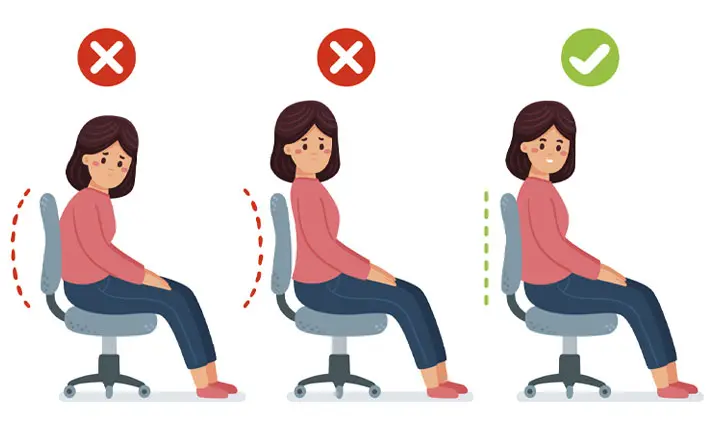
- Is your chair adjusted for support and comfort?
- Are your feet firmly supported on the floor, or a footstool?
Keyboard and Mouse
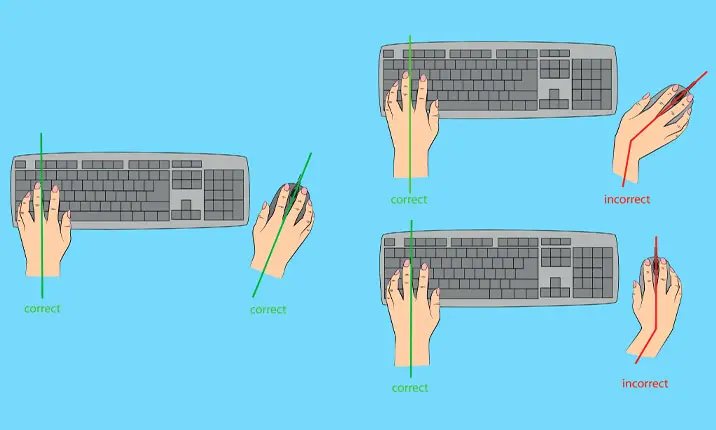
- Are your shoulders relaxed?
- Are your elbows next to your sides, not reaching forward?
- Is your keyboard at seated elbow height?
- Is your mouse also at seated elbow height, and beside the keyboard?
- Are your wrists straight (not bent up, down or side to side) when typing and using the mouse?
Work Habits
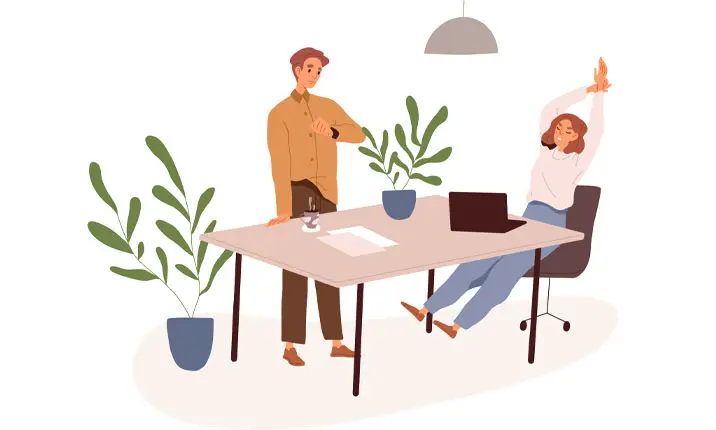
- Do you take regular micro breaks away from the computer throughout the day?
- Do you reduce repetitive typing and mouse use through the use of macros, shortcuts and arrow keys?
- Is your phone posture acceptable?
Monitor
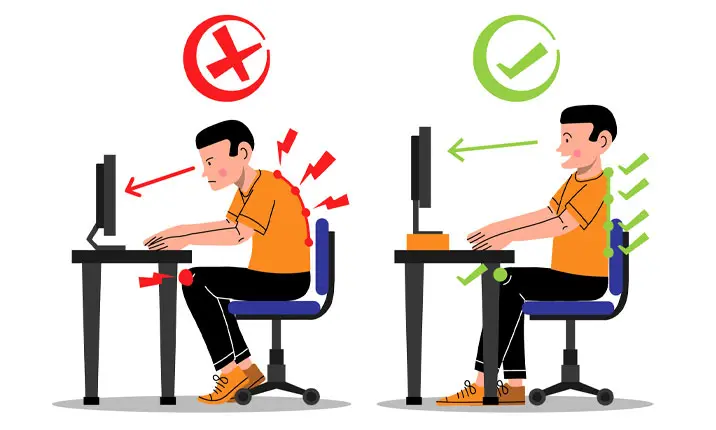
- Is your head upright and straight (not severely bent or turned when viewing the monitor or documents)?
- Is the monitor and keyboard placed directly in front of you?
- Is the viewing distance approximately an arm’s distance away?
Work Environment and Surface
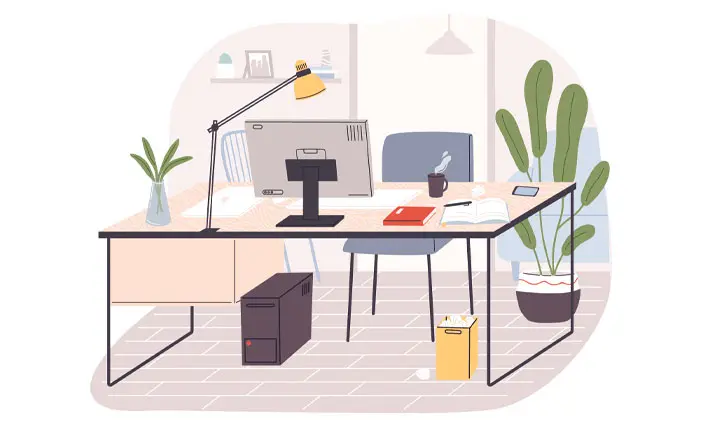
- Do you have enough leg clearance at your workstation?
- Are you frequently using items placed close to you?
Good to know
The purpose of creating an ergonomic work space is more than just to ensure we can maximise our productivity throughout the day. Ensuring an ergonomic work space can save you from experiencing chronic aches and pains, and enables you to stay strong and well for longer.
If you have questions about your posture or ergonomics and are unsure about whether your work from home set up is serving you well, do call us for advice or make an appointment. Our Parkway Rehab therapists can be reached at +65 6307 7950 (Paragon clinic). Walk-in consultations are also available.
Related Articles
View all
Life Without Arthritis: Total Knee Replacement
Getting a new knee may have sounded like science fiction a few decades ago, but a total knee replacement is now a relatively common procedure.

Worst Sports Injuries
Not everyone who participates in sports knows about the risks involved – until they get hurt. Here are the top 5 serious sports injuries and how they can be treated.

Diabetes and Amputation: How to Save Your Leg
Complications arising from diabetes and Peripheral Arterial Disease often result in patients losing a limb, but it does not have to be that way.

How Singapore Slinger Wong Wei Long Copes with Sports Injuries
Professional athletes collect a score of injuries during their career. Singapore Slinger Wong Wei Long shares how he minimises sports injuries on the job.

Top 3 Common Sports Injuries
You can better avoid risks that you know and understand. Here are some common injuries to be mindful of when participating in your favourite sport.

Suffering from Back Pain? Here are 3 Procedures that might Improve Your Life
Back pain is increasingly common among office workers who sit down all day. Learn more about 3 spine treatments that can treat your back problems.
Latest Articles
View All
Ask our Doctor: What are Breast Cancer Risks and Early Signs?
Our breast surgeon explains how to understand your risk, warning signs to know, why screening matters even when you feel well, and what surgery can look like today.

Knee Osteoarthritis: What To Do When Knee Pain Gets Worse?
As knee osteoarthritis progresses, everyday activities can become more difficult. Our pain specialist and orthopaedic surgeon explain the treatment options available and how to find the right approach for you.

Weight Loss Has Plateaued. Does Your Treatment Need to Change?
Dr Edwin Chng from Parkway Shenton explains why weight loss can slow down during medical weight management, and when it may be time to review your treatment plan.

Ask Our Doctor: How Is Prostate Cancer Detected and Diagnosed?
Prostate cancer is common, often silent, and still diagnosed too late in Singapore. Urologist Dr Tan Yung Khan on what every man should know about screening, diagnosis, and treatment.

A Guide to Haze Season in Singapore: 8 Tips to Stay Healthy
We answer common questions about haze, and how this can affect common chronic lung conditions such as asthma and chronic obstructive pulmonary disease (COPD), and 8 simple tips to protect ourselves against it.

Diagnosed With a Brain Aneurysm? Here's What Happens Next
Our neurosurgeon, Dr Vincent Ng, explains the factors specialists consider when deciding whether a brain aneurysm should be monitored or treated, and what the different treatment options involve.