


Dr Lee Yuh Shan
Haematologist


 Add as a preferred source on Google
Haematologist
Most people hear "blood cancer" and think of one specific illness, but it's an umbrella term covering several distinct conditions.
The 3 main categories are leukaemia (which most people associate with blood cancer), lymphoma (cancer of the lymphatic system), and myeloma (cancer of plasma cells in the bone marrow).
Each behaves differently, requires different treatments, and has its own spectrum of subtypes. In fact, lymphoma alone has over 100 recognised classifications – a complexity that underscores why specialist diagnosis is so important.
The honest answer is that many blood cancers don't have a single identifiable cause. They arise from a combination of genetic mutations, ageing, and sometimes environmental factors.
Myeloma, for instance, is closely tied to the ageing process: as we get older, genetic mutations naturally accumulate, and in some individuals, these can trigger the disease.
Certain lymphomas have been linked to viral infections, making them partially preventable.
Acute leukaemia, on the other hand, has known environmental risk factors. Exposure to toxic agents like pesticides, and chemicals like benzene and formaldehyde have been associated with higher rates of the disease in some populations. That said, for many patients, there is no clear lifestyle or environmental trigger, and mutations arise spontaneously.
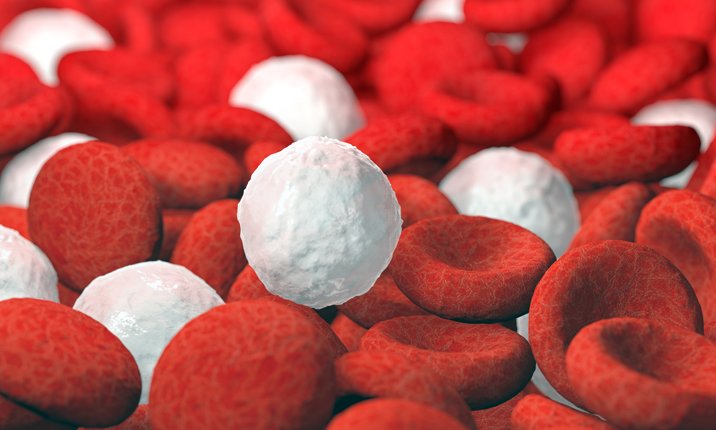
An elevated white blood cell count is one of the signals that can point a doctor towards a blood cancer diagnosis, particularly conditions under the umbrella of leukaemia or myeloproliferative neoplasms, which cause the bone marrow to overproduce blood cells.
I had a patient who came in with persistently high platelets and white cells; deeper investigation using genetic testing revealed a JAK2 mutation, which was driving abnormal cell production.
Acute leukaemia can also present with an abnormal white cell count. A persistently elevated count that doesn't resolve on its own should always be investigated further, including with a bone marrow study if needed.

Blood cancers can be insidious because their early symptoms – fatigue, loss of appetite, unexplained weight loss, back pain, or a swollen lymph node – are easy to attribute to something less serious.
I had a 17-year-old who came in with reduced appetite, back pain, and lethargy, only to be found to have an aggressive lymphoma with a large abdominal mass which compressed on his back, resulting in back pain as a symptom.
Another patient noticed bubbles in his urine, which turned out to be caused by a kidney obstruction from a tumour. We should not dismiss persistent, unexplained symptoms, especially a combination of them.
Yes, leukaemia is potentially curable, and the prospects have improved dramatically in recent years.
The goal of treatment has shifted significantly: today, the benchmark for remission is no longer just fewer than 1% leukaemic cells visible under the microscope.
Doctors now aim for what's called measurable residual disease (MRD) negativity – meaning the cancer cannot be detected even at a genetic level. Achieving this state opens the door to potentially avoiding a bone marrow transplant in certain diseases such as in acute lymphoblastic leukaemia in some patients. Achieving a MRD negative disease has also been shown to correlate with better outcomes for patients proceeding to bone marrow transplant.
For others, stem cell transplantation remains the best curative option, and with newer transplant technologies, it is now possible to use partially-matched to half-matched donors – known as haploidentical transplant, (including family members such as parents) when a fully-matched donor cannot be found. Outcomes continue to improve year on year.
Treatment decisions are highly personalised and depend on several factors: the specific subtype and genetic profile of the cancer, the patient's age, and crucially – their physical fitness. Not all patients of the same age are alike.
Some 70-year-olds who cycle 20 to 30km every weekend, or who are active in their lifestyles, are those who can tolerate more intensive treatment regimens and have more options of treatment.
Genetic profiling of the tumour now plays a central role – it allows doctors to classify the disease into risk categories and choose targeted therapies accordingly. Singapore also has access to many newer drugs that have received regulatory approval, giving doctors a broad toolkit to sequence treatments based on how each patient responds.
CAR-T cell therapy – short for chimeric antigen receptor t-cell therapy – is one of the most exciting advances in blood cancer treatment. It works by extracting a patient's own immune cells (T-cells), genetically engineering them in a laboratory to enable the CAR T-cells to recognise and attack cancer cells, multiplying them, and then infusing them back into the patient.
The therapy has shown remarkable results in patients with lymphoma and B – acute lymphoblastic leukaemia who have relapsed after standard chemotherapy, including patients who are considered difficult to treat.
I had an elderly patient in his seventies who had relapsed just 6 months after achieving complete remission; after a single infusion of CAR-T cells, the disease was brought under control for more than a year now. This was not possible previously as this disease was usually more aggressive and patients would not be able to tolerate intensive chemotherapy.
The therapy is commercially available in Singapore, and research is advancing rapidly – newer versions now target multiple proteins on cancer cells simultaneously, and some designs can be produced in as little as a week, compared to the 2 – 3 weeks traditionally required.
Bispecific antibodies are another emerging class of treatment that works alongside or as an alternative to CAR-T therapy. Where CAR-T involves reengineering a patient's own cells, bispecific antibodies are drugs that act as a bridge – linking the patient's immune cells directly to tumour cells and directing an immune attack.
Several bispecific antibodies are now commercially available in Singapore for B-lymphoblastic leukaemia (B-ALL), lymphoma and myeloma patients, giving doctors more options to consider, particularly for those who may not be suitable candidates for CAR-T therapy.
Multiple myeloma, a cancer of plasma cells in the bone marrow, is increasingly being managed as a chronic condition rather than an acute crisis.
Treatment for myeloma has evolved so dramatically that the conversation has moved almost entirely away from traditional chemotherapy. Targeted treatments and antibody-based therapies are now the standard.
I had a case of a severely ill patient who had suffered bowel complications, multiple ICU admissions, and organ damage from the disease. With a carefully managed treatment plan and multidisciplinary care, this patient recovered to the point of walking independently and running his own business again.
For some blood cancers with known risk factors, such as those linked to certain viruses, or leukaemia associated with toxic chemical exposure – there is a degree of preventability.
But for many patients where no specific cause is identified, the disease cannot be avoided.
I need to stress the importance of maintaining good physical health even if prevention isn't possible: a fit, healthy body tolerates treatment better and keeps more treatment options on the table. Eat well, maintain your fitness, and that will open up your options.

Genetic testing has transformed blood cancer medicine. Where doctors once relied primarily on what they could see under a microscope, next-generation sequencing (NGS) now allows for a far deeper analysis of a tumour's genetic makeup – revealing mutations that are invisible to conventional tests, tracking disease progression over time, and guiding treatment choices.
I had a patient whose condition appeared stable on standard tests but, with NGS, was shown to have accumulated additional mutation – a sign of disease progression that would have been missed otherwise. This technology is now routinely used in Singapore for diagnosing and monitoring leukaemia, and is increasingly accessible.
Learn more about leukaemia, lymphoma, myeloma, and find our specialists at Mount Elizabeth Hospitals.
Blood cancer is one of many cancers our specialists treat every day. From haematology and stem cell transplantation to medical oncology, radiation, and beyond, our cancer care team brings deep, multidisciplinary expertise to every diagnosis – so wherever your journey begins, you are in experienced hands.
Learn more
A monthly breast self-examination 7 – 10 days after your period starts can save your life.

More women are being claimed by breast cancer now than before. Love them by encouraging them to go for breast screening.

Dr Tan Yah Yuen, general surgeon at Mount Elizabeth Hospitals, answers the questions you may have about mastectomies.

Dr Wee Siew Bock, breast surgeon at Mount Elizabeth Hospital, address your questions and concerns about breast conserving surgery (lumpectomy).

Dr Liau Kui Hin explains pancreatic neuroendocrine tumours (PNETs) and the newer, effective treatments for this uncommon cancer.

Dr Tan Yu-Meng, general surgeon at Mount Elizabeth Hospitals, gives us the stark facts about pancreatic cancer and the treatment options available for patients.

Our breast surgeon explains how to understand your risk, warning signs to know, why screening matters even when you feel well, and what surgery can look like today.

As knee osteoarthritis progresses, everyday activities can become more difficult. Our pain specialist and orthopaedic surgeon explain the treatment options available and how to find the right approach for you.

Dr Edwin Chng from Parkway Shenton explains why weight loss can slow down during medical weight management, and when it may be time to review your treatment plan.

Prostate cancer is common, often silent, and still diagnosed too late in Singapore. Urologist Dr Tan Yung Khan on what every man should know about screening, diagnosis, and treatment.

We answer common questions about haze, and how this can affect common chronic lung conditions such as asthma and chronic obstructive pulmonary disease (COPD), and 8 simple tips to protect ourselves against it.

Our neurosurgeon, Dr Vincent Ng, explains the factors specialists consider when deciding whether a brain aneurysm should be monitored or treated, and what the different treatment options involve.
Gleneagles Hospital is part of IHH Healthcare, one of the world's largest integrated healthcare networks.

Download the MyHealth360 app to access an array of medical services conveniently.


Get trusted medical advice from our specialists, dietitians and physiotherapists directly in your inbox.
Subscribe