


Dr Lim Keng Hua
Otorhinolaryngologist


Source: Shutterstock
 Add as a preferred source on Google
Otorhinolaryngologist
Haze irritates the lining of your nose and sinuses. If you have allergic rhinitis, expect more sneezing, blockage and runny nose, and in some people a sinus infection. For most people, haze irritation settles when the air clears. Symptoms that last, get worse or come with a fever need a doctor.
For causes of haze in Singapore and PM2.5, see our guide to haze and your health.
For protection steps such as masks and air purifiers, see our haze season tips.
Your nose is the first line of defence. It warms, humidifies and filters the air you breathe. Haze particles irritate its lining, which can cause a runny or blocked nose, sneezing and a scratchy throat. In healthy people, this irritation usually settles on its own (Ministry of Health, Singapore, 2016).
Your sinuses are air-filled spaces that drain into the nose. When the nose lining swells, drainage can slow down and the sinuses feel blocked or pressured.
People who breathe through the mouth, often because of long-term nasal blockage, miss out on the nose’s filtering. Fine particles then reach the throat and lungs more easily.
It can.
Allergic rhinitis is inflammation of the nose lining that is triggered by allergens, and in Singapore a common trigger is the house dust mite. The lining is already hypersensitive, so haze particles can lead to stronger symptoms that flare more often and take longer to settle.
Typical symptoms are sneezing, an itchy, runny or blocked nose, and sometimes itchy, watery eyes.
Evidence on haze itself is limited, but studies of air pollution point the same way:
Allergic rhinitis is considered poorly controlled if it affects 4 days a week. A specialist review is recommended if you do not get better despite medicine from your family physician.

Haze does not directly infect your sinuses. But uncontrolled rhinitis can block sinus drainage, and trapped mucus can lead to congestion, facial pain and infection (sinusitis).
Studies that link PM2.5 to long-lasting sinus inflammation (chronic rhinosinusitis) look at years of exposure, so they do not show that a few weeks of haze causes it.
See a doctor if your sinus symptoms:
Get urgent care for:
Haze particles do not stop at the nose. They travel down into the airways and settle on the surface of the eye, so several other conditions can flare up. The ones below are the most common, and for asthma and COPD the evidence is strongest. They are also the conditions most easily mistaken for a simple haze reaction, which is why it helps to know their signs.
In addition to allergic rhinitis, these are:
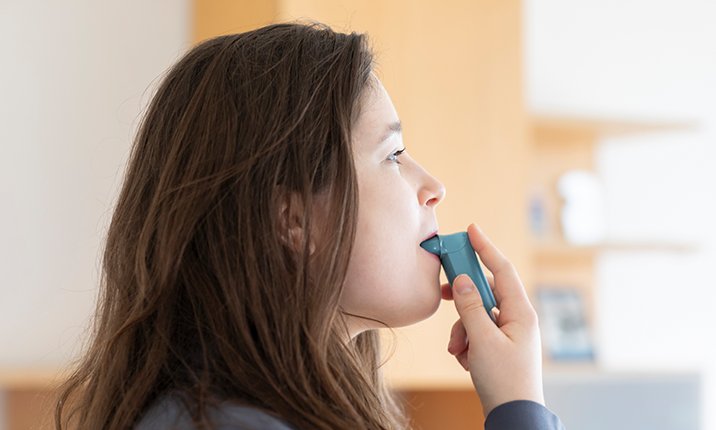
Haze can inflame the airways and trigger attacks. Wildfire smoke is linked to asthma flare-ups, emergency visits and admissions (Wilgus & Merchant, 2024). Across eight countries and territories, every 1 µg/m³ rise in wildfire PM2.5 was linked to 0.48% more asthma hospitalisations (Zhang et al., 2025). In Singapore, every 10-unit rise in the 24-hour PSI was linked to 3.1% more asthma admissions (Ministry of Health, Singapore, 2016).
Irritated airways can swell and produce extra mucus, causing a cough with phlegm, wheeze, chest discomfort and breathlessness. Haze can bring on these bronchitis-type symptoms.
People with COPD are more vulnerable to flare-ups (Wilgus & Merchant, 2024). In the same eight-country analysis, every 1 µg/m³ rise in wildfire PM2.5 was linked to 0.38% more COPD hospitalisations (Zhang et al., 2025).
Haze can irritate the surface of the eye, causing red, itchy, watery eyes. People with dry eyes or allergic conjunctivitis may be more affected. SingHealth lists an allergic reaction to smoke as a cause of sore eyes (SingHealth, n.d.).
Haze irritation can look like a common cold, and haze may make infections more likely. Across eight countries and territories, every 1 µg/m³ rise in wildfire PM2.5 was linked to 0.42% more hospitalisations for acute upper respiratory infection (Zhang et al., 2025). The evidence here is less settled than for asthma and COPD.
Irritation from haze tends to ease when you are away from the smoke or when the air clears. An infection is more likely if you have a fever, or if symptoms last or get worse.
| More likely haze irritation | More likely infection | |
|---|---|---|
| Timing | Appears or worsens on hazy days, eases when the air clears | Keeps going or gets worse for more than about a week |
| Fever | Not a recognised direct effect of haze | Common |
| Other signs | Dry or scratchy throat, watery eyes, mild runny nose | Thick green phlegm, body aches, high fever, breathlessness |
If you already have allergic rhinitis, the aim is to keep it controlled before and during haze:
For protection steps such as staying indoors, masks, air purifiers and air-conditioner filters, see our haze season tips.
While most haze-related symptoms are mild, some conditions may require prompt medical attention, particularly if symptoms worsen or do not improve with your usual treatment.
Our Urgent Care Centres at Mount Elizabeth, Gleneagles and Parkway East Hospitals are open 24/7 with an average wait time of 30 minutes.
For severe breathlessness, chest pain or other life-threatening emergencies, call 995 immediately.
If you experience non-urgent symptoms such as a persistent cough, blocked nose, sore eyes or a sore throat with a mild fever, consider visiting a GP.
Under Singapore’s Haze Subsidy Scheme, eligible Singapore Citizens pay $10 or less for the treatment of haze-related conditions, such as asthma and allergic rhinitis, at participating Public Health Preparedness Clinics (PHPCs), including Parkway Shenton clinics and Parkway MediCentre.

Dr Rebecca Heywood explains the causes of single-sided deafness, why two-ear hearing matters, and the treatment options available to improve your hearing and quality of life.

The Haze Subsidy Scheme lets eligible Singapore Citizens pay $10 or less for haze-related conditions. See who qualifies, what it covers, and when to seek care.

Our breast surgeon explains how to understand your risk, warning signs to know, why screening matters even when you feel well, and what surgery can look like today.

As knee osteoarthritis progresses, everyday activities can become more difficult. Our pain specialist and orthopaedic surgeon explain the treatment options available and how to find the right approach for you.

Dr Edwin Chng from Parkway Shenton explains why weight loss can slow down during medical weight management, and when it may be time to review your treatment plan.

Prostate cancer is common, often silent, and still diagnosed too late in Singapore. Urologist Dr Tan Yung Khan on what every man should know about screening, diagnosis, and treatment.
We answer common questions about haze, and how this can affect common chronic lung conditions such as asthma and chronic obstructive pulmonary disease (COPD), and 8 simple tips to protect ourselves against it.

Our neurosurgeon, Dr Vincent Ng, explains the factors specialists consider when deciding whether a brain aneurysm should be monitored or treated, and what the different treatment options involve.
Gleneagles Hospital is part of IHH Healthcare, one of the world's largest integrated healthcare networks.

Download the MyHealth360 app to access an array of medical services conveniently.


Get trusted medical advice from our specialists, dietitians and physiotherapists directly in your inbox.
Subscribe